Every government insists it serves the people. Every politician promises stability, prosperity, and growth. But behind the speeches and campaign slogans sits another force—quieter, more technical, and far more powerful. That force is the central bank.
Central banks don’t march in parades or ask for your vote. Most people can’t even name the people who run them. Yet these institutions decide how much money exists, which banks survive, who gets bailed out, and who gets left behind. They can make your mortgage cheaper, erase the value of your savings, or rattle your retirement fund. And they do all of this without a single ballot cast in their direction.
This is the real story of how central banks rose from obscure institutions to the power brokers of the modern world.
The Origins: Money, Monarchs, and War
To understand their rise, we need to return to the 17th century. Europe was in constant turmoil. Wars devoured treasuries, monarchs spent recklessly, and governments were perpetually short on hard currency.
In England, King William III needed funds to fight France, but lenders didn’t trust the crown. The solution was a new type of institution—the Bank of England. It had a special privilege: it could issue notes backed by government debt. For the first time, the money circulating through an economy wasn’t just gold or silver. It was paper backed by the credit of the state.
The Bank of England became both the king’s lender and the nation’s financial anchor. The message was clear. If you control credit, you control the state.
Other nations took note. Sweden’s Riksbank had existed since 1668, but it was the English model that became the template. Through the 18th and 19th centuries, central banks spread across Europe, their growth tied to governments that needed reliable credit for wars, expansion, and industrial development.
By the Napoleonic era, the link between war and finance was undeniable. Napoleon’s armies marched on borrowed money as much as gunpowder. Britain’s ability to borrow through the Bank of England gave it the endurance France lacked. The pound, underpinned by the bank, became the anchor of the global financial system. Many wars were won not just on battlefields, but on balance sheets.
America Joins the Game
Across the Atlantic, the United States limped through the 19th century with a fragmented financial system. Banks issued their own notes, and panics erupted whenever confidence faltered. The panic of 1907 was the breaking point. The system collapsed, banks failed, and panic spread nationwide.
It wasn’t Congress that rescued the economy—it was a single private banker, J.P. Morgan. From his mansion, he corralled financiers, locked the doors, and forced them to provide the liquidity needed to stop the crisis. One man had stabilized the system more decisively than the federal government.
The political humiliation was profound. America needed an institution that could act like Morgan, but on behalf of the entire country.
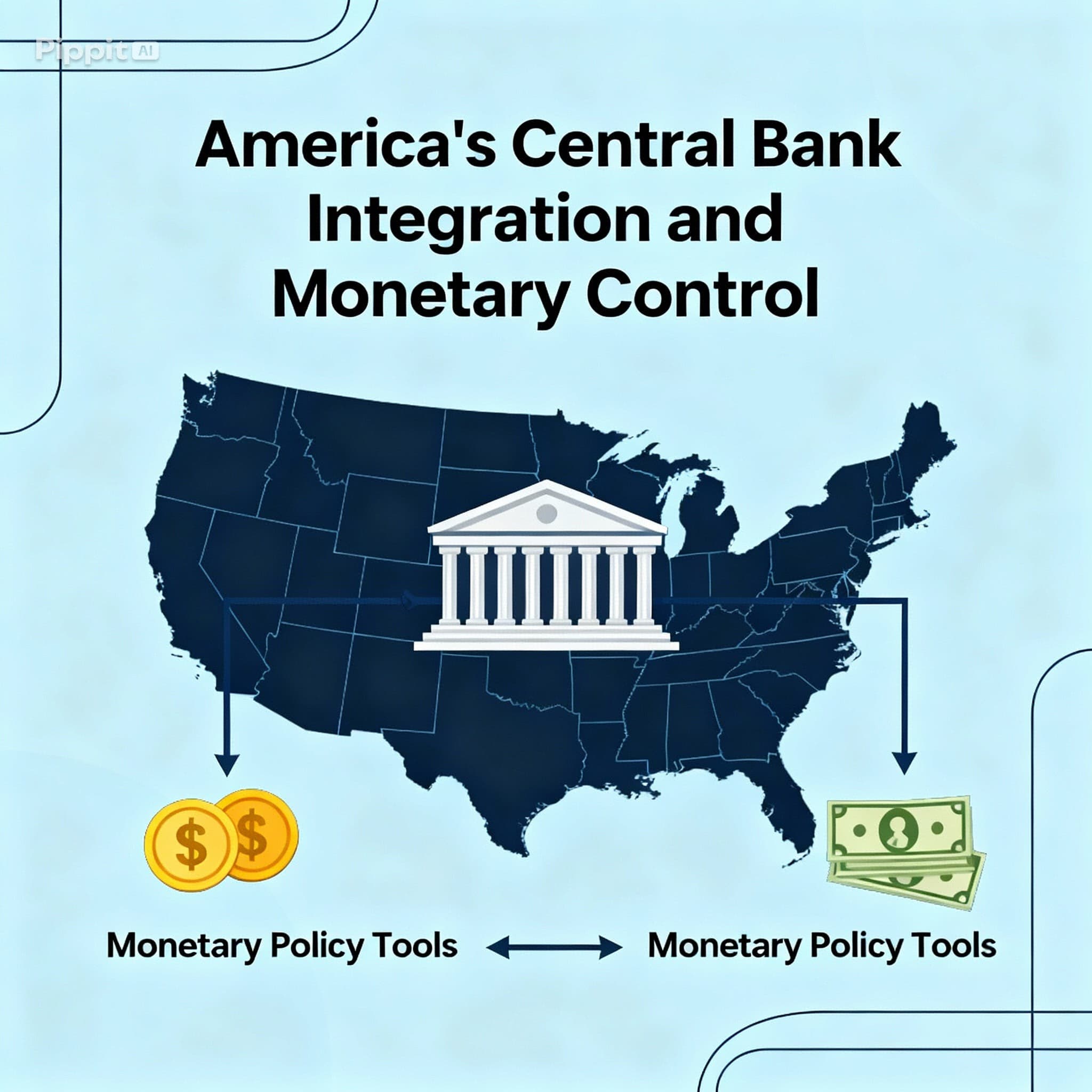
After years of debate and secret meetings at a private retreat on Jekyll Island, Congress created the Federal Reserve in 1913. Designed to be independent from day-to-day politics yet deeply connected to Wall Street, the Fed was empowered to issue currency, set interest rates, and act as lender of last resort. Few Americans understood just how much power had just been granted.
The 20th Century: Crisis, Inflation, and Global Control
World War I put central banks to their first major test. The cost of modern warfare was astronomical. Taxes were nowhere near enough. Central banks stepped in, creating money, issuing bonds, and keeping governments solvent. The gold standard couldn’t survive the strain and was suspended.
When governments face an existential threat, central banks finance them. That was the brutal lesson of the era.
Weimar Germany learned it the hard way. Under political pressure, the Reichsbank printed marks until they were worthless. Hyperinflation became a global warning, but it didn’t end the experiment. If anything, it cemented central banks as indispensable—even when they caused the disasters.
The Great Depression revealed another truth. When the bubble burst in 1929, the Federal Reserve was slow to act. Banks collapsed, credit dried up, and millions fell into poverty. Economists still debate the Fed’s role, but one reality is beyond dispute: the choices of a central bank can determine the fate of entire nations.
After World War II, governments wanted to avoid another collapse. At Bretton Woods in 1944, 44 nations agreed to build a new international system. The U.S. dollar would anchor the world’s currencies and the Fed, alongside the Treasury, would sit at the center of the global economy. Money had officially become geopolitics.
That system lasted until 1971.
The Break: Fiat Money and a New Era of Power
Mounting costs from the Vietnam War and heavy domestic spending put pressure on America’s gold reserves. Other nations wanted gold in exchange for their dollars, and the reserves began to drain. President Richard Nixon faced a choice: defend the gold standard or abandon it entirely.
He chose the latter. On August 15, 1971, Nixon ended dollar convertibility. Without gold backing, the world entered a new monetary era. Money was now purely fiat—created by decree, managed by central banks.
The age of restraint was over.
The Modern Era: Crisis, Rescue, and Dependence
Consider the last fifty years:
Volcker’s Hammer (1980s)
To crush inflation, Fed Chair Paul Volcker pushed interest rates to nearly 20 percent. The result was a painful recession, but also the restoration of confidence in the dollar. One policy decision reshaped the entire economy.
The 2008 Financial Crisis
When global markets imploded, central banks unleashed trillions in newly created money. Quantitative easing saved banks and markets, enriching those with assets while punishing savers with near-zero interest rates.
The 2020 Pandemic
Central banks printed at a pace once unimaginable. Stimulus checks, bailouts, corporate rescues—money was created with a keystroke. Balance sheets exploded, and inflation returned with a vengeance.
Each intervention expanded their power. Every rescue made markets more dependent on their support.
The Hidden Power Structure
Central banks like to present themselves as neutral, technocratic referees. In reality, they are some of the most influential institutions on Earth. They decide who suffers recessions and who gets rescued, which institutions survive and which fail. Their decisions reach deeper into your life than nearly any election.
And they operate behind a thick curtain of jargon—liquidity facilities, open-market operations, bond purchases—all terms that conceal a simple truth: they create and allocate money on a scale no private institution can match.
The global economy now runs on an unspoken assumption: central banks will always step in. Governments run massive deficits expecting low rates. Investors chase bubbles assuming the “Fed put” will save them. Banks take risks knowing someone will bail them out.
But no system built on perpetual intervention can last forever. The Bank of England once seemed unshakeable. The Reichsbank collapsed. Bretton Woods imploded. Monetary architectures fail when trust erodes.
What This Means for You
Recognizing central bank power isn’t about conspiracy. It’s about clarity.
When central banks tighten policy, your mortgage climbs. When they inflate markets, asset owners win and savers lose. When trust in a currency fades, central banks cannot print credibility.
Resilience comes from things they cannot manufacture: skills, productive businesses, land, and scarce assets like gold. These have survived every collapse of monetary trust.
The secret history of central banks isn’t hidden. It’s written into every crisis, bailout, and inflationary spiral. These institutions were created to serve governments, grew by financing wars, expanded by rescuing markets, and now sit at the center of a financial empire that spans the globe.
They are unelected. They are insulated from accountability. Yet they shape your economic future more intimately than any law passed by Congress or any speech made on a campaign stage.
That is the paradox of modern finance. The people we never vote for control the money we cannot live without.
If this gave you a new way to look at the world, tap subscribe. The future may be uncertain, but the past is full of answers—and it’s been trying to warn us all along.