If you're trading individual stocks but haven't explored Exchange Traded Funds (ETFs), you're missing a powerful tool for both position trading and portfolio diversification. ETFs let you apply technical analysis to entire sectors, indices, or asset classes which are not just single tickers.
Here's how ETFs fit into a structured trading approach.
What Makes ETFs Different for Technical Traders
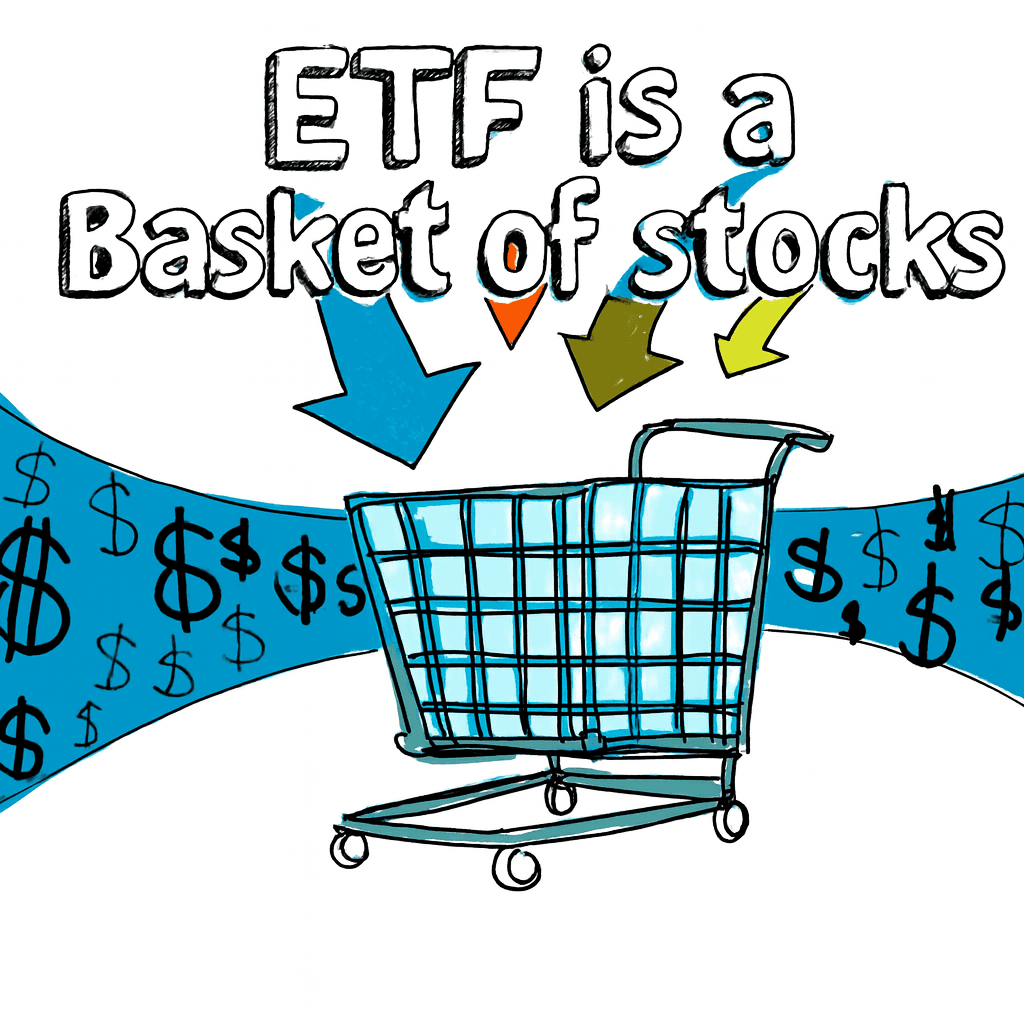
An ETF is a basket of securities that trades like a stock. You're buying exposure to dozens or hundreds of underlying assets through one ticker. This matters because you can:
- Trade sector rotations without picking individual winners
- Apply the same technical methodology to broad market moves
- Reduce single-stock risk while maintaining tradeable volatility
Think of it this way: instead of analyzing 50 technology stocks, you analyze one tech sector ETF with clear support and resistance levels.
ETFs vs. Mutual Funds: Why Traders Prefer ETFs
Both are collective investments, but ETFs have distinct advantages for active traders:
Intraday Liquidity: ETFs trade throughout market hours with real time pricing. Mutual funds price once daily after close useless for technical entries and exits.
Lower Costs: Most ETFs carry lower expense ratios because they're passively managed. Over years of compounding, this difference becomes significant.
Tax Structure: ETFs typically generate fewer taxable events than mutual funds, though consult your tax advisor for specifics.
For traders who rely on price action and volume analysis, the intraday tradability is the key differentiator.
Why ETFs Work in a Technical Framework
We focus on probability based setups, not predictions. ETFs offer several structural advantages:
Clean Technical Patterns
Broad market ETFs like SPY or QQQ show cleaner accumulation and distribution phases than individual stocks. Why? They're less susceptible to company specific news or earnings surprises. The underlying mechanics and institutional positioning, volume clusters, liquidity zones shows up more clearly.
Sector Rotation Opportunities
Markets rotate between sectors based on economic cycles. Rather than guessing which individual stock benefits, you can trade the rotation itself. When energy shows relative strength versus tech, you're looking at XLE versus XLK not drilling through 50 companies.
Simplified Risk Management
One position gives you diversified exposure. If you're right about the sector but wrong about a specific company, the ETF cushions that error. Your technical read on the broader structure still plays out.
Transparent Holdings
Most ETFs disclose holdings daily. You know exactly what you own and can verify whether the underlying components support your technical thesis.

Types of ETFs for Technical Trading
Different ETF structures serve different trading strategies:
Index ETFs: Track major benchmarks (SPY for S&P 500, QQQ for Nasdaq-100). High liquidity, tight spreads, clear institutional footprints.
Sector ETFs: Isolate specific industries (XLF for financials, XLE for energy). Perfect for rotation plays and relative strength analysis.
Commodity ETFs: Gain exposure to gold (GLD), oil (USO), or agricultural products without futures contracts.
Volatility ETFs: Trade market fear directly (VXX, UVXY). Advanced instruments that require careful position sizing.
Leveraged and Inverse ETFs: Magnify returns or profit from declines. Higher risk, meant for short term tactical trades, not long term holds.
Applying Methodology to ETF Selection
Here's how to incorporate ETFs into your workflow:
Step 1: Identify Market Phase
Start with broad market structure. Is SPY in accumulation, markup, distribution, or markdown? This context determines whether you're looking for long or short setups.
Step 2: Scan for Relative Strength
Which sectors are showing strength or weakness relative to the broader market? Use comparative charts to spot rotation patterns.
Step 3: Confirm Volume and Liquidity
Check average daily volume. You want ETFs with enough participation to ensure tight spreads and reliable price action. Thin volume creates slippage and false signals.
Step 4: Map Key Levels
Apply the same structural analysis you'd use on any ticker. Identify support, resistance, volume nodes, and probable reversal zones. ETFs respect these levels just like individual stocks.
Step 5: Size Appropriately
Even with diversification, position sizing matters. An ETF represents multiple underlying risks. Calculate your exposure accordingly
Real World Application: Using ETFs in Multi Timeframe Analysis
Let's say you're bullish on the tech sector based on weekly structure. Instead of picking individual stocks:
- Analyze QQQ or XLK for the primary position
- Identify the specific subsector showing relative strength (semiconductors, software, etc.)
- Use a focused ETF like SMH (semiconductors) or IGV (software) for concentrated exposure
- Let the diversification handle company specific noise while your technical read plays out
This approach isolates your edge, it helps reading market structure while reducing the noise from earnings surprises, management changes, or product launches.
Risk Considerations
ETFs carry market risk. The underlying assets will fluctuate, and your position moves with them. A few specific considerations:
Tracking Error: Some ETFs don't perfectly mirror their underlying index. Check historical tracking accuracy.
Liquidity Gaps: Avoid thinly traded ETFs. Low volume means wider spreads and potential slippage on entries and exits.
Leveraged Decay: Leveraged ETFs reset daily. They're not suitable for multi day holds due to compounding effects that erode returns.
Expense Ratios: Even low fees compound over time. Compare similar ETFs and choose the most cost efficient option.
Due diligence still matters. Just because an ETF simplifies access doesn't mean you skip the structural analysis.
Building Your ETF Watchlist
Create a tiered watchlist based on your typical trading timeframe:
Tier 1 – Market Context: SPY, QQQ, IWM (broad market indices)
Tier 2 – Sector Rotation: XLF, XLE, XLK, XLV, XLI (major sector ETFs)
Tier 3 – Focused Themes: SMH, GDX, XHB (subsector or thematic ETFs)
Tier 4 – Tactical Tools: VXX (volatility), TLT (bonds for risk-off moves)
Monitor these regularly to spot rotation patterns, relative strength shifts, and structural changes across the market.
Bottom Line
ETFs aren't just for passive investors. They're tactical instruments that let you trade market structure, sector rotation, and institutional positioning with less single stock noise.
Apply the same probability-based methodology you'd use on any chart. Map the structure, identify high probability zones, manage your risk, and execute when the setup aligns.
Whether you're position trading or managing a longer term portfolio, ETFs give you exposure to the moves that matter without betting everything on individual company outcomes.